Worried about your parents’ safety at home? How door sensors gave me peace of mind
You know that knot in your stomach when you’re away from home and wonder if your elderly parent is safe? I felt it daily—until I discovered how simple door and window sensors could ease that fear. They didn’t just alert me to unexpected movements; they quietly helped track daily routines, offering real insight into my mom’s well-being. This isn’t about high-tech surveillance—it’s about care, connection, and breathing easier, one small click at a time.
The Quiet Worry No One Talks About
There’s a kind of worry that doesn’t make noise. It’s not dramatic. It doesn’t come with alarms or urgent calls. It’s the quiet hum in the back of your mind when you’re folding laundry or driving to work and suddenly wonder: Is Mom okay? Did she take her medicine? Did she eat? Did she fall and can’t reach the phone? For years, I carried that hum like a second heartbeat.
I’m not alone. So many of us—daughters, sons, caregivers—live in this in-between space. We want our parents to live independently, to have dignity and freedom in their own homes. But at the same time, we’re terrified. We love them fiercely, and that love comes wrapped in fear. I used to call my mom every morning, at lunch, and again in the evening. Three times a day. It felt like the least I could do. But then, one day, she stopped answering. Not because she was in danger—but because she’d forgotten her phone in the kitchen. That silence? It shattered me. I drove 45 minutes to check on her, heart pounding the whole way. When I arrived and found her perfectly fine, watering her plants, I didn’t feel relief—I felt exhaustion. This couldn’t be the rhythm of my life. I couldn’t keep living on high alert.
That’s when I realized the real problem wasn’t lack of care. It was lack of reassurance. We pour so much love into our parents, but we have no way of knowing if that love is landing. We want to protect, but we don’t want to hover. We want connection, but not at the cost of their independence. That tension—between love and fear, between care and control—is real. And it’s exhausting. I needed a way to stay connected without being intrusive. I needed a way to know she was okay without having to ask.
How a Simple Sensor Changed Everything
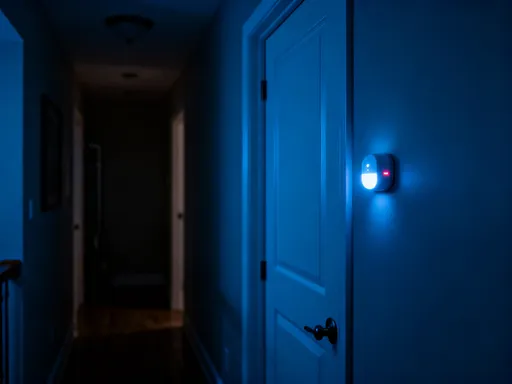
The answer came from the most unexpected place: a small, white plastic device the size of a matchbox. A door sensor. I’d seen them advertised as part of home security systems, but I didn’t care about burglars. I cared about my mom’s front door opening at 10 a.m. every Tuesday. That was grocery day. And if the door didn’t open? That was a red flag.
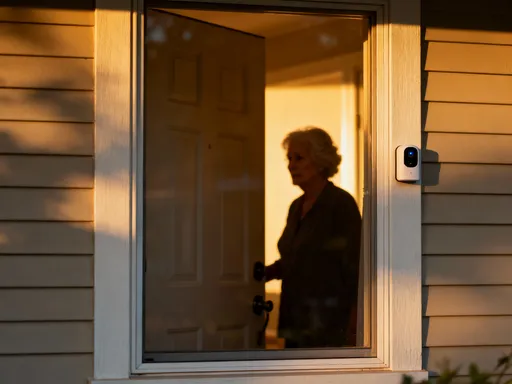
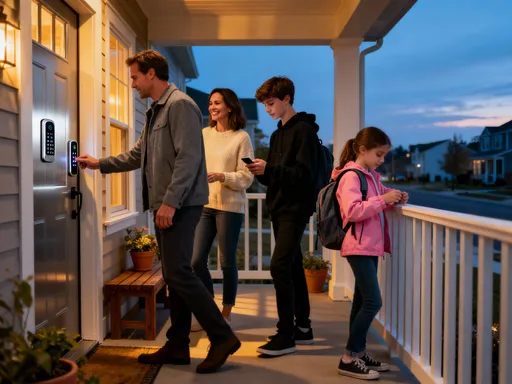
I installed one on her front door—just one, to start. It was easy. Peel and stick. No wires, no drilling, no electrician. It connected to a simple app on my phone. When the door opened, I got a gentle notification: Front door opened at 10:02 a.m. That first Tuesday, when I saw that message, I actually smiled. She was up. She was moving. She was living her life. And I knew it—without calling, without interrupting, without making her feel like she was being watched.
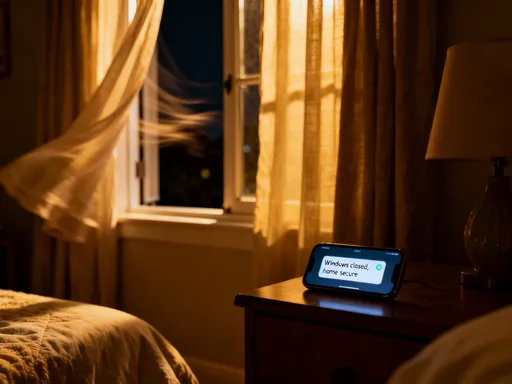
But it wasn’t just about groceries. I started noticing patterns. The bedroom window opened around 8:30 most mornings—her way of letting in fresh air. The kitchen door opened several times a day—cooking, tea, snacks. These weren’t security alerts. They were life alerts. Each one was a tiny confirmation: She’s here. She’s active. She’s okay. One morning, I saw the kitchen door open at 7:15, then again at 7:45. I knew she’d made coffee and toast. I didn’t need to ask. I just knew. And that knowledge? It lifted a weight I hadn’t even realized I was carrying.
It wasn’t magic. It wasn’t a cure for aging or illness. But it was clarity. It was context. Instead of imagining the worst, I had data—gentle, quiet, respectful data—that told me what was actually happening. And that changed everything.
Learning to Trust the Technology—Slowly
I’ll be honest—I had doubts. Was this crossing a line? Was I turning into one of those overbearing children who monitor every move? I didn’t want to make my mom feel like she was under surveillance. So I didn’t sneak anything in. I sat down with her over tea and said, “Mom, I worry. A lot. And I know you don’t want me calling all the time. What if we tried something that could help both of us?” I showed her the sensor. I explained how it worked. I promised it wouldn’t record sound or video. It just knew when the door opened or closed.
She was quiet for a moment. Then she said, “So it’s not watching me. It’s just… noticing?” Exactly, I said. It’s not about watching. It’s about noticing. And knowing. She thought about it, sipped her tea, and said, “Well, if it helps you sleep better at night, I’m okay with that.” That moment? That was the beginning of trust—not just in the technology, but in us. In our ability to care for each other in a new way.
We agreed on the rules. No sensors in the bathroom. No sensors in her bedroom closet. Just the front door and the bedroom window—places that told us about routine, not privacy. I set up the app so it only sent me alerts if something was out of the ordinary—like if the front door opened after 10 p.m., or if no movement was detected by noon. The rest of the time? Silence. No pings, no buzzes, no stress. Just peace.
Over the next few weeks, I learned her rhythm. Coffee at 8. Walk around the block at 9:30. Kitchen visits every few hours. Nap after lunch. When the pattern held, I didn’t need to do anything. When it shifted, I checked in—naturally, gently. “Hey Mom, didn’t see you out this morning—sleep in?” Not an interrogation. Just a nudge. And she appreciated it. “You know,” she said one day, “it’s nice to know someone notices.”
Connecting Data to Daily Health Clues
Here’s what no one tells you: health isn’t just about doctor visits and medication lists. Health is routine. It’s the small, consistent things—getting up, making tea, opening the curtains, stepping outside. When those things stop happening, it’s often the first sign that something’s wrong. But without being there, how do you know?
The sensors gave me a window—not into her private life, but into her daily rhythm. And that made all the difference. One Tuesday, I noticed something odd. It was 1:15 p.m., and the kitchen door hadn’t opened all day. No breakfast. No coffee refill. No lunch prep. That wasn’t like her. I called. No answer. I tried again. Still nothing. My stomach dropped. I called a neighbor who lived two doors down and asked if she could stop by. “Just to say hi,” I said. “No emergency.”
Five minutes later, my phone rang. “She’s okay,” the neighbor said. “But she did take a little tumble in the kitchen. Nothing broken, but she’s sore and didn’t want to bother anyone.” She’d slipped on a wet spot near the sink, landed on her hip, and managed to pull herself up—but she was too embarrassed to call for help. If I hadn’t noticed the lack of movement, she might have stayed on the couch all day, in pain, thinking she was fine. But because the sensor showed no activity, I reached out. Not because I was hovering. Because I was paying attention.
The sensor didn’t prevent the fall. But it prompted help before things got worse. And that’s the real power of this technology—not in stopping accidents, but in catching the quiet aftermath. It’s not about preventing every problem. It’s about responding sooner. It’s about turning invisible struggles into visible moments of care.
Making It Work in Real Life (Without Feeling Techy)
I know what you’re thinking: This sounds complicated. I don’t do tech. I felt the same way. I’m not a gadget person. I barely know how to set up a printer. But here’s the truth: this isn’t about being tech-savvy. It’s about being loving. And the tools today are designed for people like us—busy, caring, not particularly technical.
I started with one sensor. Just one. I bought it online—less than $20. It came in a tiny box with two pieces: one for the door frame, one for the door itself. I used the adhesive strips—no tools, no drilling. I followed the app instructions (with pictures, thank goodness), connected it to my phone, and within ten minutes, it was working. That’s it. No router upgrades. No smart hub. No confusing settings. Just a simple alert when the door opened.
As I got more comfortable, I added a second sensor on her bedroom window. Same process. Same ease. The app is simple—just a timeline of activity. I don’t even look at it every day. I only check when I don’t get a morning alert or when something feels off. And the best part? It runs on batteries. I change them once a year. No wires, no electrician, no mess. It’s low-effort, high-impact care.
And my mom? She barely notices them. They’re small, discreet, and silent. She says they make her feel safer too. “If I forget to lock the door,” she told me, “you’ll know. And you’ll call. That’s comforting.” It’s not about control. It’s about backup. Like having a seatbelt—hopefully never needed, but so reassuring to have.
What It Taught Me About Care and Independence
This journey changed more than just how I check on my mom. It changed how I think about caregiving. I used to believe that being a good daughter meant calling often, asking constantly, showing up unannounced “just to make sure.” But that wasn’t care—it was anxiety disguised as love. It put pressure on both of us. She felt like she had to perform. I felt like I had to monitor.
The sensors gave us something better: context. Now, when she skips her morning walk, I don’t panic. I look at the data. Did the kitchen door open? Did she make tea? If yes, then she’s probably just tired. I text: “Rainy day? Cozy in?” Not “Are you okay??” with three question marks. That small shift—based on real information—makes all the difference. It’s less stressful for her. Less anxious for me. More dignity for her. More peace for me.
She’s not just “safe.” She’s living. And I can support that life without suffocating it. I’ve learned that independence isn’t the opposite of care. It’s the goal of care. And sometimes, the most loving thing you can do is step back—but stay connected in a smarter way. These sensors didn’t replace our relationship. They protected it. They gave us space to be ourselves—her to live freely, me to let go a little.
A Smarter, Softer Way to Love from Afar
Today, those little sensors are part of our rhythm. They don’t beep. They don’t flash. They don’t demand attention. They just… work. Quietly. Reliably. Like a good friend who checks in without making a fuss.
They’ve become a language of their own—a way for us to say, “I’m here. I care. I’m paying attention.” Without words. Without calls. Without fear. When I see that morning door alert, it’s not just data. It’s a message: She’s up. She’s moving. She’s living. And that’s enough.
Technology, at its best, doesn’t take over. It doesn’t replace human connection. It holds space for it. It removes the noise—the constant worry, the unnecessary calls, the what-ifs—so we can focus on what matters: love, trust, peace. It doesn’t make us less human. It helps us be more human. More present. More at ease.
I still call my mom. We still talk about her garden, her recipes, her memories. But now, those conversations aren’t driven by fear. They’re driven by joy. Because I’m not calling to check. I’m calling to connect.
And sometimes, all it takes is a simple click—the soft sound of a door opening, recorded by a tiny sensor—to remind me that everything is going to be okay. Not because I’m watching. But because I’m paying attention. And that? That’s the kindest kind of care there is.