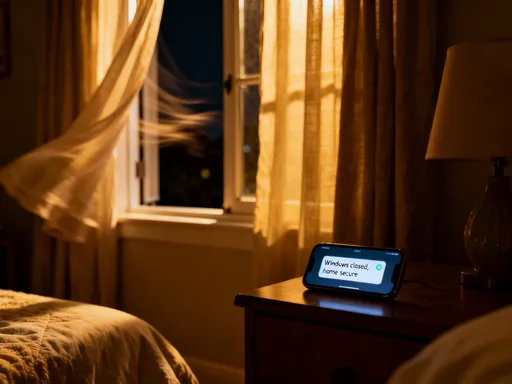
Tired of Forgetting Your Wins? This Journal App Quietly Changed My Days
Life slips by in a blur—deadlines, chores, and endless to-do lists. You chase productivity but feel disconnected from what truly matters. I used to overlook small joys and personal growth until I started using a simple digital journal app. It didn’t just track my days; it helped me *feel* them. No flashy tools or complex systems—just a quiet space to reflect, organize, and rediscover myself. If you’re feeling overwhelmed or stuck in autopilot, this might be the gentle shift you need.
The Morning Chaos No One Talks About
Let’s be honest—how many mornings start before you even open your eyes? The alarm rings, and your mind is already racing: Did I reply to that email? What’s on the calendar today? Who needs a ride? Before your feet hit the floor, you’re mentally juggling a dozen tasks, and somehow, by 8:30 a.m., you’ve already lost the day. I used to live like this—rushing through breakfast, scrolling through messages while brushing my teeth, and showing up at my desk already drained. Sound familiar?
Here’s the thing: we’ve been sold the idea that productivity means doing more, faster. But what if the real game-changer isn’t speed, but stillness? A few months ago, I made one tiny change—instead of reaching for my phone the moment I woke up, I opened a digital journal app and wrote just three sentences about how I felt. That’s it. No grand declarations, no five-step planning session. Just a quiet moment to check in with myself before the world rushed in.
And something shifted. Those few minutes didn’t just slow down my morning—they changed my entire rhythm. I started noticing things: how a deep breath could calm my shoulders, how naming my anxiety made it feel smaller, how writing “I’m grateful for a warm bed” could actually lift my mood. The app wasn’t tracking my steps or heart rate, but it was doing something even more powerful: helping me ground myself before the day began. It became my anchor, not another item on the to-do list.
Technology often feels like it’s pulling us in ten directions at once, but this was different. It wasn’t demanding attention—it was giving me space. And the best part? It didn’t require willpower or a complete lifestyle overhaul. Just five minutes, one sentence, and a willingness to show up for myself. If your mornings feel like a sprint before the starting gun, this might be the pause you didn’t know you needed.
From Scattered Thoughts to Clear Priorities
Have you ever laid in bed at night, mind buzzing with thoughts that just won’t settle? Ideas for a project, a conversation you wish you’d handled differently, a worry about your child’s school progress, a sudden memory from last week that made you smile—then frown? That mental clutter isn’t just annoying; it’s exhausting. It’s like carrying around an overstuffed tote bag with everything spilling out, and no matter how hard you try, you can’t seem to organize it.
I used to keep all of that inside, thinking I had to “handle it” on my own. But the truth is, our brains aren’t meant to hold onto everything. When thoughts stay unrecorded, they grow heavier. They loop in the background, stealing focus and energy. Then I discovered the power of offloading—writing everything down, not to analyze it, but just to set it free. I started using a digital journal app to dump my thoughts each afternoon, and it felt like opening a pressure valve.
The beauty of a digital journal is that it’s always there—on my phone, my tablet, even my laptop. I don’t need a perfect notebook or a quiet room. I can type quickly while waiting for dinner to cook, or use voice entry while folding laundry. Some days, I just say, “I’m overwhelmed,” and let the app record it. Other days, I write a full paragraph about a challenge at work. The format doesn’t matter. What matters is that the thought is out of my head and into a safe place.
Over time, I began to notice patterns. I’d see that certain days were harder not because of my schedule, but because I hadn’t slept well or hadn’t eaten lunch. I’d realize that a recurring worry was actually rooted in something from weeks ago that I’d never fully processed. The app didn’t solve my problems, but it gave me clarity. And with clarity came calm. I stopped feeling like I was drowning in my own mind. Instead, I could sort what was urgent from what was just loud. That mental space? It’s become one of my most valuable resources.
Remembering the Small Wins (And Why They Matter)
We’re wired to notice what goes wrong. Missed a deadline? That sticks with us. Had a smooth meeting? We move on. But here’s the truth: progress isn’t always loud. Growth often happens in whispers—in the quiet moments when you choose patience over frustration, when you speak up kindly, when you finish something you’ve been putting off. These are the small wins, and they matter more than we realize.
Before I started journaling, I’d go weeks without acknowledging them. I’d look back and think, “Did I even do anything this month?” But now, my digital journal has become a living record of my growth. I jot down things like, “Had a hard conversation with grace,” or “Took ten minutes to stretch instead of scrolling,” or “My daughter said I was calm today.” They seem tiny in the moment, but when I look back, they add up to something powerful.
One of my favorite features is the way the app gently reminds me of past entries. On a tough day, it might show me a note from three months ago: “Felt proud of how I handled that parenting moment.” And suddenly, I remember—I’ve been here before. I’ve grown. I’m not stuck. That simple reminder can shift my entire outlook. It’s not about boasting; it’s about bearing witness to my own journey. It’s proof that I’m moving forward, even when it doesn’t feel like it.
And here’s what’s surprising: the more I acknowledge these small wins, the more I start to notice them in real time. I catch myself thinking, “This is worth writing down.” That act of recognition builds quiet confidence. It’s not the flashy kind, but the deep, steady kind that says, “I am capable. I am growing. I am enough.” If you’ve ever felt like you’re not doing enough, this practice might be the gentle nudge you need to see your own strength.
Building a Routine That Sticks—Without the Pressure
We’ve all tried self-improvement habits that fizzled out by week two. Maybe it was a fitness app, a meditation challenge, or a complicated planner. The problem isn’t us—it’s the expectation that change has to be perfect or intense. Real life doesn’t work that way. There are sick kids, work emergencies, travel days, and moments of burnout. A habit that can’t bend will break.
That’s why I love how flexible digital journaling is. Some days, I write for ten minutes. Others, I just type one sentence: “Today was hard.” And that counts. The app doesn’t judge. It doesn’t send me a guilt-trip notification saying, “You haven’t journaled in 3 days!” Instead, it’s there when I’m ready, like a quiet friend who understands life gets busy.
I remember one week when my youngest was sick, and I was running on two hours of sleep. I didn’t have energy for paragraphs. But I opened the app and said into my phone, “I’m so tired, but I’m doing my best.” That voice note stayed there, and later, when I listened back, it wasn’t just a record—it was a moment of self-compassion. The app held space for me when I couldn’t hold it for myself.
And that’s the key: consistency over perfection. You don’t need to write every day. You don’t need to write well. You just need to show up in whatever way feels possible. Whether it’s typing, speaking, or even sketching a quick doodle, it all counts. The goal isn’t to create a literary masterpiece—it’s to stay connected to yourself. When the pressure to “do it right” is gone, the habit actually sticks. And that’s when the real magic begins.
Connecting More Deeply—with Yourself First
We spend so much time connecting—with our kids, our partners, our friends, our colleagues. We listen, we respond, we care. But how often do we truly listen to ourselves? Not the version of us that’s trying to keep it all together, but the one underneath—the one with dreams, fears, and quiet longings?
Digital journaling has become my way of checking in with that deeper self. It’s not about isolation; it’s about alignment. When I take time to reflect, I start to understand my patterns. Why do I feel drained after certain meetings? What makes me light up when I talk about a project? When was the last time I did something just for me?
The app helps with gentle prompts—things like, “What’s one thing you’re avoiding?” or “What made you smile today?” They’re not demanding answers; they’re inviting conversation. And over time, I’ve learned to trust my own voice again. I’ve realized that when I’m clear with myself, I’m kinder with others. When I understand my own stress, I’m more patient with my family. When I honor my own needs, I show up more fully in every role I play.
This isn’t selfish—it’s necessary. You can’t pour from an empty cup, and you can’t truly connect with others if you’re disconnected from yourself. Journaling has helped me rebuild that inner connection, one sentence at a time. And the ripple effect? My relationships have deepened, not because I’m doing more, but because I’m showing up as a more grounded, authentic version of myself.
How It Quietly Shapes Better Days
Change doesn’t always come with a fanfare. Sometimes, it’s so subtle you don’t notice it until you look back and realize how far you’ve come. That’s what’s happened with my journaling practice. It didn’t fix everything overnight, but over months, it’s reshaped the way I move through the world.
I make better decisions now—not because I’m suddenly smarter, but because I’m more aware. When a new project comes up, I don’t just say yes out of habit. I pause and ask, “Does this align with what matters to me?” When I’m feeling overwhelmed, I don’t just push through. I check my journal and see patterns—maybe I’m skipping breaks, or not sleeping enough. The data isn’t in charts or graphs; it’s in my own words, my own reflections.
I’ve also started saying no more often—not out of resentment, but out of clarity. I used to fear missing out or disappointing people. Now, I see that saying no to what doesn’t serve me means saying yes to what does—more time with my family, more energy for my passions, more space to breathe. The journal has helped me define what those things are.
And perhaps most importantly, I feel more present. I notice the way sunlight hits the kitchen table in the morning. I savor my coffee instead of gulping it down. I listen more deeply to my children’s stories. Life hasn’t slowed down, but my experience of it has deepened. Technology is often blamed for pulling us out of the moment, but this tool has done the opposite—it’s helped me come back to myself, again and again.
Making It Yours—Simple Steps to Begin
If you’re curious about starting, I’ll be honest: the hardest part is the first sentence. You don’t need a fancy app or a perfect plan. Just pick one with a clean interface and strong privacy settings—your thoughts deserve to be safe. Then, choose a simple trigger: after your morning coffee, during your commute, or right before bed. Start with one sentence. That’s all.
It could be, “I’m tired,” or “Today feels heavy,” or “I’m proud of how I handled that call.” There’s no right or wrong. The goal isn’t to write a novel—it’s to create a habit of turning inward. If you miss a day, that’s okay. If you write three words, that’s enough. This isn’t another chore to check off. It’s a gift to yourself—a quiet space to be seen, heard, and held.
And if you’re thinking, “I don’t have time,” ask yourself: how much time do I spend scrolling, worrying, or feeling disconnected? This practice takes less time than a single social media scroll, but the return is so much greater. You’ll start to notice patterns, celebrate progress, and feel more in control of your days.
At its best, technology shouldn’t distract us from life—it should deepen it. This little journal app didn’t change my life with flashy features or complex algorithms. It changed it by giving me back my attention, my awareness, and my sense of self. If you’ve ever felt like you’re running on autopilot, this might be the gentle reset you’ve been looking for. Your story is worth remembering. Start writing it—one small sentence at a time.