What If Your Front Door Could Help Your Family Actually Get Along?
Ever feel like everyone in your home is living on a different schedule? You’re not alone. Between kids rushing to school, partners juggling work calls, and late-night arrivals, simple things—like who’s coming or going—can turn into misunderstandings. A quick text to ask, “Did you lock the door?” turns into a missed message, then a worry, then a tense conversation. But what if a small change, like upgrading your front door, could reduce tension, build trust, and bring calm to your household? It’s not magic—it’s smarter living, quietly working for you. And the best part? It doesn’t require a full home tech overhaul. Just one thoughtful upgrade can ripple through your family’s daily rhythm in ways you didn’t expect.
The Everyday Chaos No One Talks About
Let’s be honest—most of us don’t live in perfectly synced households. You wake up early to pack lunches, your partner grabs coffee on the way to a meeting, the kids are out the door by 7:30, and by evening, everyone arrives in waves. Sound familiar? It’s not that we’re not trying. It’s that our homes still run on routines from another era—like keys, sticky notes, and shouting down the hallway: “Don’t forget to lock up!”
But here’s what no one really talks about: these little gaps in communication create more stress than we admit. That moment when your teenager is 20 minutes past curfew and you’re pacing, wondering if they’re okay. Or when your spouse gets home late, only to find the door locked and no one around to let them in. It’s not anger you feel first—it’s worry. And when that happens again and again, it starts to wear on everyone.
These aren’t relationship problems. They’re logistics problems. And the good news? They don’t require deep conversations or family meetings to fix. Sometimes, all it takes is a small shift in how your home works. Think about it: when was the last time a simple “I’m home” text made you exhale? That’s the kind of relief we’re talking about—not grand gestures, but quiet moments of connection that add up.
Families today aren’t broken. They’re just moving fast. And the tools we’ve been using—keys, memory, guesswork—aren’t built for this pace. But what if your home could keep up? Not by becoming a sci-fi movie, but by quietly knowing who’s where, when it matters most.
How a Simple Upgrade Changes More Than Security
When you hear “smart lock,” you probably think about not losing your keys. And yes, that’s a win. But the real benefit isn’t just convenience—it’s clarity. A smart door lock does more than lock and unlock. It creates a gentle awareness across your household. You don’t have to ask, “Did you leave the door unlocked?” because you can check from your phone. You don’t have to wonder if your daughter made it home from practice because you get a soft notification when the door opens with her code.
This isn’t about tracking. It’s about peace of mind. It’s the difference between guessing and knowing. And that small shift changes the emotional temperature in your home. No more jumping at every text. No more imagining the worst when someone’s late. Instead, you see a simple alert: “Front door unlocked at 8:42 PM.” And instead of panic, you think, “Ah, my son’s home. I’ll check in later.”
And here’s something most people don’t expect: it actually reduces nagging. You know the cycle—“Did you lock the door?” “I think so.” “Are you sure?” Now, you can see for yourself. No accusations. No back-and-forth. Just quiet reassurance. That kind of trust doesn’t come from lectures. It comes from systems that work.
Plus, it’s not just for parents. Imagine your partner working late and you’re already asleep. With a smart lock, they can let themselves in without fumbling for keys or waking the house. No more cold waits on the porch or calls at midnight. That small act of ease? It adds up to more patience, more rest, and fewer irritations the next morning.
Building Trust Without Saying a Word
If you’ve got teens, you know the tightrope walk: they want independence, and you want to know they’re safe. It’s not about control. It’s about care. And a smart lock can actually help you walk that line with more grace. Instead of standing at the window waiting, or texting every five minutes, you get a simple, silent update when they unlock the door with their code.
Think about how powerful that is. Your daughter comes home from a friend’s house, lets herself in quietly, and heads upstairs. You don’t need to call out. You don’t need to interrupt her. You just know. And she doesn’t feel watched—she feels trusted. That’s the magic. The technology isn’t hovering. It’s supporting. It gives her the freedom she needs and gives you the reassurance you crave—without a single word being exchanged.
And it’s not just for kids. What about your aging parent who comes to help with the kids? You can give them a code that works only on weekdays, or during school pickup hours. No need for a physical key that could get lost. No need to change the locks when they’re done helping. You can even set a temporary code for the babysitter that expires after the weekend. These small gestures? They say, “I trust you,” without handing over a key that lasts forever.
One mom I spoke with told me, “Before, I used to stress if my son was late. Now, I wait for that little ping. It’s like he’s saying, ‘I’m home,’ without having to text me. And honestly, he likes that too—he doesn’t feel like I’m on his case.” That’s the kind of quiet understanding that builds stronger relationships. Not because you’re talking more, but because you’re worrying less.
Syncing Life Rhythms, One Entry at a Time
Family life isn’t about rigid schedules. It’s about flexibility. Someone’s sick. A meeting runs late. The dog needs a walk. Life happens. And your home should be able to adapt—without you having to be the central operator.
A smart lock lets you do that. Imagine your sister is dropping off soup for the kids when you’re stuck in traffic. Instead of rushing or calling her to wait outside, you can unlock the door from your phone. She walks in, leaves the bag, and locks up behind her. Done. No stress. No delay. Or picture your dog walker arriving while you’re at your daughter’s recital. With a scheduled access window, they can come and go without needing a key or disturbing the family.
And it’s not just about letting people in. It’s about keeping everyone in the loop. You can set up alerts so that when the house cleaner arrives at 10 AM, everyone gets a quick note. No more awkward surprises or missed handoffs. It’s like having a gentle assistant who helps your home run smoothly—even when you’re not there.
One dad shared how this changed his week: “My wife and I both work full-time. On Tuesdays, my mom picks up the kids from school. I used to have to call her every week to remind her the door code changed. Now, I just update it once, and she gets a message. It’s one less thing to manage, and she never feels left out.”
That’s the beauty of it. Technology isn’t replacing your family’s rhythm. It’s syncing with it. It’s not demanding your attention. It’s freeing you from the little things so you can focus on what really matters—being present when you’re home.
Less Conflict, More Calm: Real Conversations That Changed
You’d be surprised how many arguments start over something as small as a locked door. “I thought you locked it!” “No, I saw you do it!” Or worse: “Why didn’t you answer when I knocked?” These aren’t fights about love or loyalty. They’re fights about frustration—built up from tiny, repeated stressors.
But when those stressors start to disappear, something shifts. One mom told me, “We used to argue about who forgot the keys. My husband would get locked out at least once a week. I’d be in the shower, the kids would be screaming, and he’d be banging on the door. Now? He just opens the app and lets himself in. We haven’t had that fight in months.”
Another family shared how it helped with their teen: “We used to have this rule—text when you get home. But sometimes he’d forget, and I’d panic. We’d get into it—‘You’re not responsible!’ ‘You’re too controlling!’ It was awful. Now, I see the door open on my phone. I don’t have to ask. He doesn’t have to remember. And we’re both calmer.”
That’s the hidden benefit: fewer small fires mean more emotional bandwidth. You’re not walking around with that low-level hum of worry. You’re not saving up frustrations for the weekend. And when you’re not drained by the little things, you have more patience for the big things—like helping with homework, listening to your partner’s day, or just sitting together in peace.
Technology won’t fix a broken relationship. But it can remove the pebbles in your shoe—the tiny irritations that make every step harder. And when those are gone, you might just notice how much smoother the walk feels.
How to Start Small (And Why You Should)
If this all sounds great but a little overwhelming, I get it. The idea of “smart home” can feel like you need to buy ten gadgets and become a tech expert overnight. But that’s not true. You don’t need to automate your whole house. You just need to start with one thing that solves a real problem for your family.
And the front door? It’s the perfect place to begin. Here’s how to start small: First, pick a reliable smart lock from a well-known brand. Look for one that works with your existing door and doesn’t require a hub—something simple to install, maybe even DIY. Read reviews. Ask friends. This isn’t about the fanciest model. It’s about the one that works quietly and consistently.
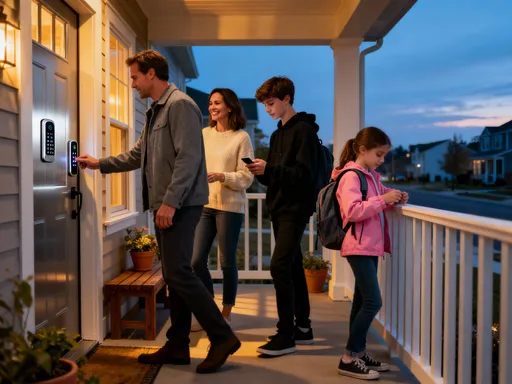
Next, set up individual access codes. Give each family member their own—no more shared “family code” that everyone uses. This way, you can see who’s coming and going. And don’t forget the people outside your immediate family: the babysitter, the neighbor who checks in, the dog walker. Temporary codes are a game-changer.
Then, decide how you’ll use notifications. Some families like to see every entry. Others only want alerts during certain hours—like after 9 PM or before 7 AM. The key is to use it in a way that feels supportive, not intrusive. This isn’t surveillance. It’s awareness. And you get to decide what level works for your family.
Finally, start with one goal. Maybe it’s “no more locked-out moments.” Or “know when the kids are home.” Or “stop worrying when I’m away.” Pick one. Focus on it. Let the rest unfold naturally. You’ll be surprised how quickly it becomes part of your rhythm—like checking the weather or setting the coffee pot.
Technology That Fits Your Life, Not the Other Way Around
The best technology doesn’t shout. It whispers. It doesn’t demand your attention. It gives it back. A smart lock isn’t about flashy lights or voice commands. It’s about creating space—space for calm, for connection, for breath.
Think about your home. It’s not just a place where you sleep and eat. It’s where your family grows. Where memories are made. Where you recharge. And when your home works a little better, everything else does too. Mornings are smoother. Evenings are quieter. Worries shrink. Trust grows.
And maybe, just maybe, you start to feel a little more in sync—not because everyone’s on the same schedule, but because you’re all a little more seen, a little more supported. Your daughter walks in, and you know. Your partner comes home late, and they don’t have to knock. Your mom drops off groceries, and it’s no big deal.
These aren’t huge moments. But together, they build something powerful: a home that feels like it’s on your side. Not because it’s full of gadgets, but because it’s designed with care—care for your time, your peace, your family’s rhythm.
So if you’ve been wondering whether tech can really make life better, let me say this: it’s not about having the latest device. It’s about choosing tools that help you live the way you want to live. Calmer. Closer. More connected.
And sometimes, that starts with something as simple as your front door.