From Sleepless Nights to Sweet Dreams: How AR Brought Peace Back to My Bedroom
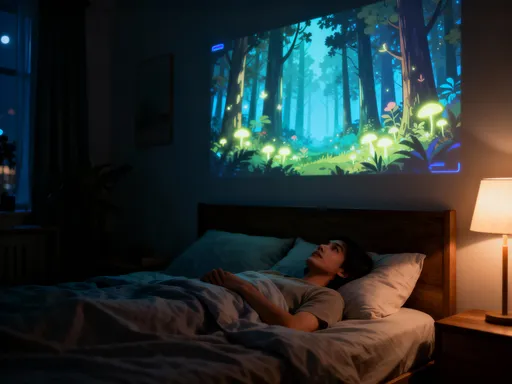
Ever lie in bed, mind racing, while your phone glows in the dark? I did too—until I discovered how augmented reality could quietly transform my sleep routine. No hype, no gadgets—just gentle, immersive moments that helped me unwind naturally. This isn’t about fixing insomnia with tech, but about using it to create calm, connection, and consistency in everyday life. It started by accident, really. One night, instead of scrolling through endless videos, I opened an app that projected a soft forest onto my bedroom wall. No sound. No notifications. Just slow-moving leaves and quiet light. And for the first time in years, I fell asleep without counting breaths or begging my brain to shut off.
The Nighttime Struggle: When Rest Feels Out of Reach
Let’s be honest—how many of us truly wind down at night? For years, my evenings looked the same: dinner, dishes, a few hours of TV, then lying in bed, staring at the ceiling. My phone was always within reach, and I’d tell myself just one more scroll. But that ‘one more’ turned into twenty minutes, then thirty, then an hour. By the time I put it down, my mind was wide awake—buzzing with emails, to-do lists, and things I should’ve said at work. I wasn’t just tired; I was mentally tangled.
Waking up felt like starting the day already behind. My mood was off, my patience thinner, and even simple tasks felt heavy. I tried everything—sleep trackers, white noise machines, herbal teas, even journaling. Some helped a little, but nothing stuck. The real issue wasn’t my body; it was my brain. It didn’t know how to shift from ‘go’ mode to ‘rest’ mode. I needed a signal, a soft cue that told my nervous system: *It’s okay to slow down now.* I just didn’t know where to find it—until I stumbled on something unexpected: augmented reality.
A Different Kind of App: When Technology Soothes Instead of Stims
When I first heard about AR sleep apps, I’ll admit—I was skeptical. Another screen? Another device? The last thing I wanted was more blue light or another app demanding my attention. But what surprised me was how different this felt. Instead of flashing alerts or tracking my every breath, the app I tried simply projected a calm forest scene onto my bedroom wall. No commands. No setup. Just soft light, gentle motion, and silence.
It wasn’t about replacing my bedtime routine. It wasn’t even about replacing anything. It was about creating a space—a visual pause—where my mind could finally settle. I didn’t have to focus on it, but I could if I wanted to. I could watch the leaves drift, or close my eyes and just feel the warmth of the glow. It was like having a quiet corner in nature, right in my room. And the best part? It didn’t feel like tech. It felt like a moment of peace I could step into, not a task I had to complete.
What made it work was how it engaged my senses without overwhelming them. Most digital tools either distract or demand focus. This did neither. It was present, but not pushy. It gave my eyes something soft to rest on, which in turn helped my mind let go. I didn’t realize how much my brain craved that kind of gentle input until I experienced it. It wasn’t entertainment. It was *settlement.* And that small shift—away from stimulation and toward stillness—was exactly what I needed.
How AR Creates Calm: The Quiet Science Behind the Magic
You might be wondering—how can a simple projection actually help with sleep? It sounds almost too simple. But there’s real science behind why this works, even if it feels like magic. Our brains are wired to respond to visual cues, especially in familiar spaces. When you use AR to transform a corner of your bedroom into a quiet forest or a starry sky, you’re not just changing what you see—you’re changing how your brain interprets the space.
Think about it: most of us associate our bedrooms with stress—work emails on the laptop, unfinished chores, or even arguments. That’s why simply lying in bed doesn’t always signal rest. But when you introduce a consistent, calming visual—like slow-moving waves or drifting clouds—your brain starts to form a new association. Over time, it learns: *This space, this light, this moment means it’s time to relax.* It’s similar to how a warm bath or a favorite blanket can signal sleep, but now it’s built into your environment.
What makes AR especially effective is that it doesn’t require effort. You don’t have to focus hard or ‘do’ anything. The visuals are designed to be engaging enough to draw your attention away from racing thoughts, but subtle enough that you don’t get mentally stuck on them. It’s called ‘soft fascination’—a term psychologists use to describe the kind of gentle attention that helps the mind rest. Nature has always offered this—think of watching clouds or a flickering fire—but AR brings it into your home, on your terms.
And unlike music or guided meditations, which can sometimes feel directive or overwhelming, AR visuals are open-ended. You can look at them or ignore them. You can breathe with them or just let them be. That sense of choice—of control—makes the experience feel safe, not forced. For someone like me, who often felt pressured to ‘relax’ (which only made it harder), that made all the difference.
Building a Better Bedtime: My Simple AR Routine
Once I realized how much this was helping, I wanted to make it a real part of my routine—not just something I did when I couldn’t sleep. So I created a simple, repeatable ritual. Thirty minutes before I plan to sleep, I start winding down. I brush my teeth, wash my face, and then open the AR app. I aim my phone at the same corner of the room every night—a blank wall near my nightstand. Within seconds, a quiet ocean scene appears: soft waves rolling in, faint sparkles on the surface, a slow, steady rhythm.
I don’t turn on any sound. I like the silence. Instead, I sit on the edge of the bed or lie back with my eyes open, just watching. Sometimes I pair it with deep breathing—inhale for four, hold for four, exhale for six. Other nights, I do a few gentle stretches or just sip a cup of chamomile tea. The key is consistency: same time, same spot, same soft glow. It’s become something I look forward to, not another box to check.
What’s surprising is how quickly this became a signal to my body. After a few weeks, just seeing the light appear made me feel calmer. My shoulders would drop. My breathing would slow. It was as if my nervous system recognized the cue and started to shift gears automatically. I didn’t have to try to relax—I just did. And when I finally turned off the light, my mind wasn’t racing. It was ready.
One of the things I love most is that this ritual doesn’t require perfection. Some nights, I’m still tired from the day. Some nights, I forget to start it on time. But even ten minutes makes a difference. It’s not about fixing everything in one go. It’s about creating a small, reliable moment of peace—one that adds up over time. And because it feels good, not forced, I actually stick with it.
Beyond Sleep: Unexpected Gains in Daily Life
I didn’t expect much beyond better sleep. I thought, *If I just wake up feeling more rested, that’s enough.* But what happened was bigger than that. The calm I found at night started to spill into my days. I felt more patient—with my kids, my partner, even in traffic. I wasn’t snapping over small things. I wasn’t reaching for coffee by 10 a.m. just to feel human. I had energy, yes, but more than that—I had presence.
My focus improved. I could sit through a meeting without my mind wandering. I started reading again—actual books, not just articles on my phone. I even picked up journaling, something I hadn’t done in years. Writing down my thoughts felt easier because my mind wasn’t so cluttered. It was like the quiet at night had created space in my brain, and that space let me think more clearly, feel more deeply.
And here’s something I didn’t see coming: I started feeling more connected—to myself, to my family, to the moment. When my daughter told me about her day, I was really listening. When my husband asked how I was, I didn’t just say ‘fine’—I paused and thought about it. That small nightly ritual hadn’t just improved my sleep. It had improved my life. It gave me a foundation of calm that everything else could build on.
AR didn’t solve all my problems. Life is still busy. Stress still shows up. But now I have a tool—a quiet, gentle way to reset. And that makes all the difference. It’s not about escaping reality. It’s about coming back to it, more centered, more grounded, more myself.
Making It Work for You: Simple Steps to Start
If you’re curious about trying this, I want you to know—this isn’t complicated. You don’t need special glasses, a headset, or an expensive device. All you need is a smartphone and a blank wall in your bedroom. That’s it. The apps are easy to find—just search for ‘AR sleep’ or ‘relaxation AR’ in your app store. Look for ones with soft visuals, minimal interaction, and no loud sounds. You want something that feels calming, not flashy.
Start small. Try it for just ten minutes before bed. Aim your phone at a corner of the room, let the scene play, and just be with it. You don’t have to do anything. You can breathe, stretch, sip tea, or just watch. The goal isn’t to fall asleep during it—though that might happen—but to create a transition from the busyness of the day to the quiet of night.
Consistency matters more than duration. Try to use it at the same time, in the same spot. That helps your brain form the association: *This light, this scene, this moment means it’s time to slow down.* Don’t worry if it feels strange at first. It might. But give it a few nights. Let yourself get used to it. And don’t judge it if your mind still wanders. That’s normal. The point isn’t to control your thoughts—it’s to give them a gentler place to land.
And remember: this isn’t another chore. It’s not another thing you ‘should’ do. It’s a gift you give yourself—a few minutes of peace in a world that rarely slows down. If you miss a night, that’s okay. Just start again tomorrow. The habit builds slowly, gently, like the visuals on your wall.
A New Relationship with Tech: Tools That Serve, Not Distract
This whole experience changed how I think about technology. For so long, I saw my devices as the enemy—always pulling me in, demanding attention, stealing time. I’d swear off my phone, delete apps, go on digital detoxes. But they never lasted. Because the truth is, I need my phone. I use it for work, for family, for connection. The problem wasn’t the tech itself—it was how I was using it.
AR showed me that technology doesn’t have to be draining. It can be nourishing. It can be quiet. It can help me step back instead of pulling me in. When used with intention, it doesn’t steal time—it gives it back. That night-time ritual isn’t about escaping life. It’s about returning to it, more fully, more peacefully.
And in a world that never stops moving, that’s a quiet kind of liberation. We don’t have to choose between being connected and being calm. We can have both. We can use the same tools that sometimes overwhelm us to create moments of stillness. We can turn our bedrooms into sanctuaries, not just places we collapse into at the end of the day.
So if you’re tired of fighting with your phone at night, if you’re tired of lying awake with your mind racing, I invite you to try something different. Not another tracker, not another alarm, not another app that tells you what you’re doing wrong. Try one that simply offers a quiet moment—a soft light, a gentle scene, a chance to breathe. You might be surprised how something so simple can make such a big difference. Because sometimes, peace isn’t found in doing more. It’s found in letting go—just a little, just for a few minutes, right in your own room.