I just need a little space: How family safety apps quietly changed our home life
Sometimes, caring too much feels like suffocating. I kept checking on my teens, asking where they were, when they’d be back—only to be met with silence or eye rolls. It wasn’t control; it was worry. Then I discovered a better way. These apps didn’t just track locations—they rebuilt trust. With smart settings and quiet alerts, we found balance: safety without smothering, care without chaos. This is how we stopped arguing and started understanding. And if you’ve ever felt that tug between loving too hard and letting go, this story might feel familiar. Because what we all want isn’t control—we want connection, peace of mind, and the quiet confidence that our people are okay.
The Tightrope of Love: When Protection Feels Like Pressure
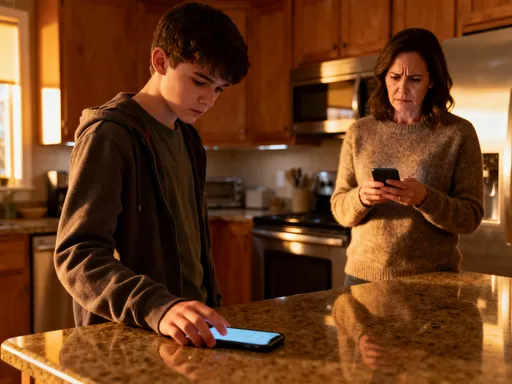
Remember that evening when your teenager was running late from practice, and every minute stretched into an hour? You told yourself not to panic. But your fingers kept drifting to your phone. Did they leave already? Are they on the bus? Why isn’t their phone answering? You send a text: "Just checking in." No reply. Another. Still nothing. By the third message, your heart’s racing. And when they finally walk through the door—safe, maybe even cheerful—you snap: "Why didn’t you answer me?" Only to hear, "Mom, I was on the bus! Everyone saw my phone light up. I felt so embarrassed."
That moment lives in my memory. It wasn’t the first time, and I know I’m not alone. So many of us walk this tightrope—wanting to protect, but ending up in conflict. We’re not trying to be overbearing. We’re just scared. Scared of the unknown, of emergencies, of that one missed call that changes everything. But our worry, however well-intentioned, often lands as pressure. Our kids don’t hear "I love you." They hear "I don’t trust you." And over time, that gap grows. The more we check, the less they share. The more we ask, the quieter they become.
I used to think my vigilance was my duty. But I was wrong. True care isn’t about constant surveillance. It’s about creating a home where everyone feels both safe and respected. Where my kids know I care, but don’t feel policed. Where I can breathe easy, not because I’m watching every move, but because I’ve built a system that supports us all. That shift didn’t happen overnight. It started with one question: What if there was a way to stay connected—without the constant texts, the arguments, the guilt?
Beyond Tracking: Seeing Family Safety Apps for What They Really Are
When I first heard about family safety apps, I’ll admit—I was skeptical. The word "tracking" made me uncomfortable. It sounded like something out of a spy movie, not a loving home. I imagined pinging my kids’ locations every ten minutes, watching a dot move across a map like some kind of digital hawk. That wasn’t the parent I wanted to be. But then a friend shared how her family used one of these apps—not to monitor, but to breathe easier. "It’s like a seatbelt," she said. "You don’t wear it because you’re planning to crash. You wear it because you want to be ready if you do."
That changed everything. I started to see these tools differently. They weren’t about control. They were about care with boundaries. Modern family safety apps aren’t designed for constant surveillance. They’re built for peace of mind. Think of them like a nightlight in a hallway—always there, but not glaring. They send alerts only when needed: when someone leaves a safe zone, when their phone battery dies, or when they arrive somewhere new. No pings. No pressure. Just quiet updates that let you know everything’s okay.
And here’s the thing—these apps don’t just help parents. They help teens too. My daughter told me, "I like knowing you can see I’m safe. It means I don’t have to keep texting you just so you don’t worry." That hit me. She wasn’t resisting care—she was resisting the friction. The app became a bridge. It didn’t replace communication. It made room for better communication. Instead of "Where are you?" texts, we could talk about her day, her friends, her dreams. The app handled the logistics. We got to focus on the connection.
These tools aren’t magic. They don’t fix broken relationships. But when used with respect and intention, they can reduce the daily stress that wears families down. They turn anxiety into awareness. They replace guesswork with gentle certainty. And most importantly, they let love lead—without fear calling the shots.
Setting Boundaries Together: How We Made the Rules as a Family
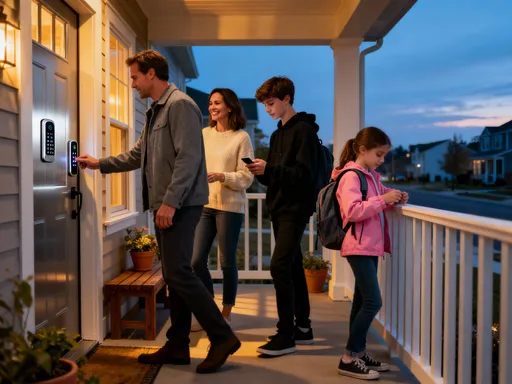
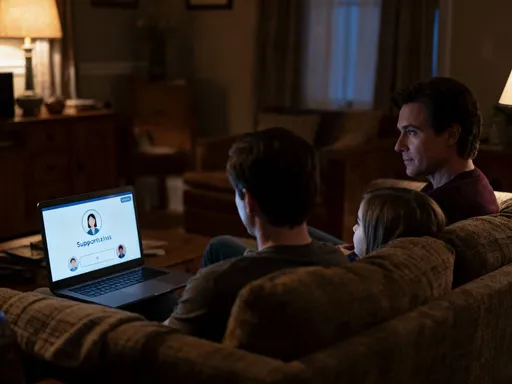
I didn’t download the app and announce it like a new house rule. That would’ve backfired fast. Instead, I brought it up during a calm weekend breakfast. "I’ve been reading about this app that helps families stay connected," I said. "Not to spy, but to make life easier. What do you think?" My son looked up from his toast. "So you want to track us?" I nodded. "Yes—but only if you’re okay with it. And we decide the rules together."
We spent that morning talking. Really talking. I asked them: What would make them comfortable? What would feel like too much? They surprised me. My daughter said, "I don’t mind if you know where I am after dark. But during school, it feels weird." My son added, "Can we turn it off when I’m at a friend’s house? Or at practice?" We wrote down their concerns. Then we looked at the app’s features. We discovered we could set "safe zones"—like home, school, and my sister’s house—where no alerts would fire. We could schedule check-ins only during certain hours. We could even let them pause location sharing for a few hours, with a notification to me when they did.
Together, we created a family agreement. The app would be on from 5 PM to 10 PM on weekdays, and from noon to midnight on weekends. It would alert me only if someone left a safe zone after dark, or if their battery dropped below 20%. They could pause it anytime, but I’d get a heads-up. And—this was key—we all agreed to review the settings every few months. This wasn’t a one-time decision. It was an ongoing conversation.
That meeting changed everything. Because it wasn’t about me imposing control. It was about us building trust. My kids didn’t feel watched. They felt included. They had a say. And when they broke a rule—like forgetting to charge their phone, which killed the app’s function—we didn’t fight. We problem-solved. "How can we make sure your phone stays charged?" not "Why did you disappear?" The tone shifted from suspicion to teamwork. And that made all the difference.
The Power of "Quiet Mode": Respecting Independence While Staying Connected
One of the most powerful features we discovered was "quiet mode"—a setting that sends alerts only when something changes, not every time someone moves. No constant pings. No digital shadow. Just a soft notification when my daughter arrived at her friend’s house. Or when my son left soccer practice. It’s subtle, but it’s everything.
Before, I’d text: "Did you leave yet?" "Are you on the bus?" "When will you be home?" Now, I don’t have to. The app tells me—quietly, respectfully. And my kids don’t feel interrupted. They’re not getting a buzz every time I check the app. They’re living their lives. I’m just… in the loop.
We also set up auto-arrival alerts. When someone reaches a destination, I get a simple "Your son has arrived at school" message. No need to ask. No need to worry. And if they’re running late, the app shows if they’re still on the move—or if they’ve stopped. Once, my daughter was delayed because her bus broke down. I saw her dot pause on the map. Instead of panicking, I waited. Then I got a text from her: "Bus issue. We’re waiting for another. Don’t worry." Because I wasn’t already stressed, I could respond calmly: "Got it. Let me know when you’re back on the move." No drama. Just support.
And during school hours, the app stays silent. No location updates. No alerts. Their time belongs to them. But if they leave campus unexpectedly, I’ll know. It’s not about control. It’s about safety with dignity. I don’t need to know every move. I just need to know they’re okay when it matters. And that balance—connection without intrusion—is what’s transformed our home life.
Teaching Responsibility, Not Reliance: Using Alerts to Grow, Not Just Track
Here’s what I didn’t expect: the app became a tool for growth. Not just safety, but maturity. We started using it to talk about habits, not just locations. Every few weeks, we’d sit down and look at the data—not to scold, but to reflect. "I noticed you’re often late to practice," I said to my son one evening. "Is something getting in the way?" He thought about it. "Yeah, I keep losing track of time after school." So we worked on a routine. He started setting a reminder to leave by 3:30. The app didn’t fix it—but it helped us see the pattern.
For my daughter, it was about phone charging. She’d come home with a dead battery, which meant the app was off. "I know," she said. "I keep forgetting." Instead of nagging, I asked, "What if we set a daily alert at 6 PM to plug in?" She agreed. Now, she gets a gentle reminder. And her phone stays alive. It’s a small win—but it’s hers. She’s learning accountability, not just obedience.
The app also helped us talk about boundaries. One day, she paused location sharing during a study group. I got the notification. Later, I asked, "Everything okay?" She said, "Yeah, I just didn’t want you seeing I was at Jake’s house. People might think…" We talked about privacy, about how she can protect her space while still keeping me informed. We adjusted the settings so she could pause it without guilt. These conversations weren’t about the app. They were about life—about respect, responsibility, and growing up.
That’s the shift: from monitoring to mentoring. The app doesn’t replace parenting. It supports it. It gives us data to start real talks. It turns invisible habits into visible patterns. And it lets us guide, not control. We’re not raising kids who obey. We’re raising adults who understand.
When Life Gets Tough: How the App Helped Without Taking Over
It was a stormy Friday night. Heavy rain, flooded streets. My daughter was coming home from a friend’s house. She was late. I checked the app. Her dot wasn’t moving. My stomach dropped. I waited. Five minutes. Ten. Then—movement. She was on the bus. I exhaled. A minute later, my phone buzzed. "Your daughter has arrived at home." She walked in, soaked but safe. "The bus was stuck," she said. "But we made it."
I didn’t call. I didn’t text. I didn’t show up. Because I knew. And that knowledge kept me calm. I greeted her with a towel, not a lecture. "Rough ride?" She smiled. "Yeah, but I’m okay." That moment meant everything. The app didn’t take over. It stepped in just enough. It gave me clarity when I needed it most—so I could respond with care, not panic.
Another time, my son forgot to turn the app back on after practice. I didn’t see his location. But I didn’t assume the worst. I waited 20 minutes—our agreed window—and then I texted: "Hey, just checking if you’re okay. App’s off." He replied: "Sorry! Left phone in locker. On my way home." No yelling. No fear spiral. Just a simple check-in, based on trust, not fear.
These moments taught me something: the app’s real value isn’t in the everyday. It’s in the exceptions. It’s not about watching every step. It’s about knowing when to act. And that distinction—between routine and emergency—is what keeps our family calm, connected, and in control.
Finding the Balance: How We All Gained More Than Just Safety
It’s been over a year since we started using the app. And I can honestly say: our home is quieter. Not in volume, but in tension. The arguments about checking in? Gone. The late-night worry spirals? Rare. The eye rolls? Replaced with eye contact, real conversations, even laughter.
But the biggest change isn’t in the technology. It’s in us. We’ve learned to trust more. To communicate better. To give space without fear. My kids know I care. I know they’re growing up. And we’ve found a way to walk that line together—without either of us falling off.
The app didn’t fix everything. We still have tough days. We still disagree. But now, we start from a place of trust, not suspicion. We have tools that support us, not divide us. And we’ve created a rhythm—where safety and independence aren’t opposites, but partners.
So if you’re standing where I once stood—heart in your throat, phone in your hand, wondering how to let go without losing connection—know this: you don’t have to choose. You can care deeply and still give space. You can protect without smothering. You can love fiercely, and let them breathe.
Technology, when used with heart, doesn’t replace family. It protects it. It doesn’t control life. It makes room for it. And sometimes, the quietest tools—the ones that work behind the scenes—make the loudest difference. Because in the end, it’s not about the dots on a map. It’s about the love behind them. And that’s something no app could ever track—but every one of us can feel.